MGB & GT Forum
O2 sensor for AFR
Posted by Perdido







 |
Topic Creator (OP)
Jun 7, 2019 05:07 PM
Top Contributor
 Joined 18 years ago
5,280 Posts
|
 This topic is about my

Goofy question...has anyone ever drilled and tapped a cast iron exhaust manifold for an O2 sensor? Thinking about doing just that on a couple of cars that have dual manifolds.
Thanks, Rut
1960 Bugeye,1275, 5 speed
1970 MGB, Pale Primrose
1967 Triumph TR4a
1966 Triumph TR4a
When I went to school, they asked me what I wanted to be when I grew up. I wrote down 'happy'. They told me I didn't understand the assignment, and I told them they didn't understand life. John Lennon
Thanks, Rut
1960 Bugeye,1275, 5 speed
1970 MGB, Pale Primrose
1967 Triumph TR4a
1966 Triumph TR4a
When I went to school, they asked me what I wanted to be when I grew up. I wrote down 'happy'. They told me I didn't understand the assignment, and I told them they didn't understand life. John Lennon

tahoe36c
Paul Hruza
|
Jun 7, 2019 05:31 PM
Joined 12 years ago
14,284 Posts
|
Rut,
I would be careful in knowing whose AFR system will be in use in conjunction with the sensor. I will be using the Innovate Motorsports LC-2 Digital Air/Fuel Ration Sensor Controller.
They recommend welding the bung (for sensor installation) at least 24 inches downstream of the exhaust port outlet (after the collector). Emphasis on "after the collector". The sensor will be nowhere near the factory exhaust manifold.
The only sensor I have seen on the actual manifold is for exhaust gas temp (EGT)...
Those who confuse Burro and Burrow don't know their @ss from a hole in the ground...
Edited 1 time(s). Last edit at 2019-06-07 05:55 PM by tahoe36c.
I would be careful in knowing whose AFR system will be in use in conjunction with the sensor. I will be using the Innovate Motorsports LC-2 Digital Air/Fuel Ration Sensor Controller.
They recommend welding the bung (for sensor installation) at least 24 inches downstream of the exhaust port outlet (after the collector). Emphasis on "after the collector". The sensor will be nowhere near the factory exhaust manifold.
The only sensor I have seen on the actual manifold is for exhaust gas temp (EGT)...
Those who confuse Burro and Burrow don't know their @ss from a hole in the ground...
Edited 1 time(s). Last edit at 2019-06-07 05:55 PM by tahoe36c.
|
Jun 7, 2019 05:41 PM
Joined 11 years ago
159 Posts
|
|
There are straps with a bung for an O2 sensor that just bolt on around an exhaust pipe.
You just drill a hole for the sensor and bolt on the strap around the pipe. Much easier than trying to tap a manifold. I've never had much luck tapping cast iron.
You just drill a hole for the sensor and bolt on the strap around the pipe. Much easier than trying to tap a manifold. I've never had much luck tapping cast iron.
|
|
Topic Creator (OP)
Jun 7, 2019 09:49 PM
Top Contributor
Joined 18 years ago
5,280 Posts
|
In reply to # 3955485 by tahoe36c
Rut,
I would be careful in knowing whose AFR system will be in use in conjunction with the sensor. I will be using the Innovate Motorsports LC-2 Digital Air/Fuel Ration Sensor Controller.
They recommend welding the bung (for sensor installation) at least 24 inches downstream of the exhaust port outlet (after the collector). Emphasis on "after the collector". The sensor will be nowhere near the factory exhaust manifold.
The only sensor I have seen on the actual manifold is for exhaust gas temp (EGT)...
I would be careful in knowing whose AFR system will be in use in conjunction with the sensor. I will be using the Innovate Motorsports LC-2 Digital Air/Fuel Ration Sensor Controller.
They recommend welding the bung (for sensor installation) at least 24 inches downstream of the exhaust port outlet (after the collector). Emphasis on "after the collector". The sensor will be nowhere near the factory exhaust manifold.
The only sensor I have seen on the actual manifold is for exhaust gas temp (EGT)...
Paul,
I’ve also got an innovate AFR and I was thinking it might be too close, but I thought, what about one on each side of the manifold? That way I could use 2 O2 sensors to give me a more accurate reading for my carbs. I’ve got a few extra exhaust manifolds,so why not see what happens?
Thanks, Rut
1960 Bugeye,1275, 5 speed
1970 MGB, Pale Primrose
1967 Triumph TR4a
1966 Triumph TR4a
When I went to school, they asked me what I wanted to be when I grew up. I wrote down 'happy'. They told me I didn't understand the assignment, and I told them they didn't understand life. John Lennon
|
tvrgeek
Scott S
|
Jun 8, 2019 05:47 AM
Top Contributor
 Joined 10 years ago
15,023 Posts
|
Risky to do the iron manifold as it might cause a stress crack . Better right behind it. Remember to have the tip pointing down. 24 from the collector seems a bit far, but I would not challenge the manufactures recommendation.
Is your goal to try and tap two legs to fine tune the carbs? Or are you trying to see if you have the optimal needles/spring/mass/oil for a modified engine?
Also remember, especially with a carb, they are easy to fool. A miss-fire will read lean. You need to get pretty close to perfect ignition before you can trust them. I just made a tailpipe extension with a sensor for tuning when I was dialing in a DGV. It worked fine once I quit listening to a couple "experts" on the forum.
On brand, sure the expensive Innovative or AEC are great, but my el-cheapo works fine. Bosch sensor. When I went back to SUs, I just went back to the "piston lift" method. The tailpipe sensor verified idle is in the 12.5 range ( as is spec if you translate CO to AFR) and only a shade leaner all the way up. My tuning attempts led me to believe a stock head does not like to run lean.
I have not used EGT sensors, but I suspect due to the manifolds designs you would find they are not perfectly balanced no matter what you do. Even plug reading shows that. I might suspect an iron manifold to be to slow to react to differences in EGT.
Cogito ergo sum periculoso
Is your goal to try and tap two legs to fine tune the carbs? Or are you trying to see if you have the optimal needles/spring/mass/oil for a modified engine?
Also remember, especially with a carb, they are easy to fool. A miss-fire will read lean. You need to get pretty close to perfect ignition before you can trust them. I just made a tailpipe extension with a sensor for tuning when I was dialing in a DGV. It worked fine once I quit listening to a couple "experts" on the forum.
On brand, sure the expensive Innovative or AEC are great, but my el-cheapo works fine. Bosch sensor. When I went back to SUs, I just went back to the "piston lift" method. The tailpipe sensor verified idle is in the 12.5 range ( as is spec if you translate CO to AFR) and only a shade leaner all the way up. My tuning attempts led me to believe a stock head does not like to run lean.
I have not used EGT sensors, but I suspect due to the manifolds designs you would find they are not perfectly balanced no matter what you do. Even plug reading shows that. I might suspect an iron manifold to be to slow to react to differences in EGT.
Cogito ergo sum periculoso
 |
Jun 8, 2019 06:03 AM
Top Contributor
Joined 20 years ago
46,843 Posts
|


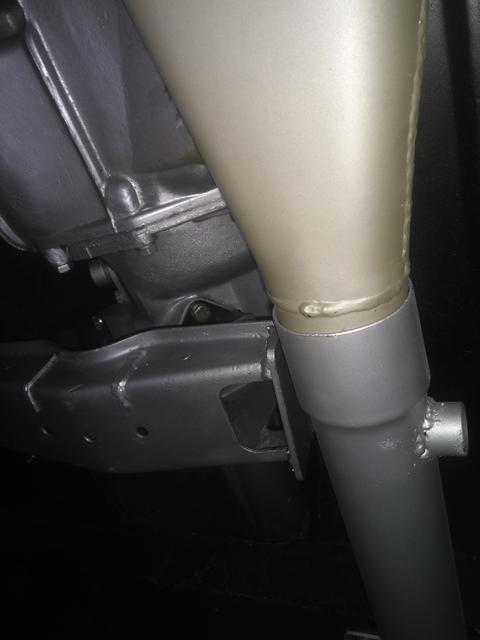
Rut you want it further back in the exhaust, I run one the race car, it's on the exhaust pipe, right after the header collector. I have been told you will burn them up if too close. Exhaust temps are an amazing thing, coming out of the head is will be over 1000 degrees, but by the time it comes out the tail pipe maybe 200 degrees. This is why the late model RB MGBs with converter, they didn't last very well, they are too close to the heat source, notice every other manufacturer in the world moved them further back
Hap Waldrop
Acme Speed Shop
864-370-3000
Website: www.acmespeedshop.com
hapwaldrop@acmespeedshop.com
Edited 1 time(s). Last edit at 2019-06-08 06:07 AM by Speedracer.
Hap Waldrop
Acme Speed Shop
864-370-3000
Website: www.acmespeedshop.com
hapwaldrop@acmespeedshop.com
Edited 1 time(s). Last edit at 2019-06-08 06:07 AM by Speedracer.
Member Services:

Attachments:
biscuit new exhasut -2.jpg 20.6 KB
|
|
Topic Creator (OP)
Jun 8, 2019 09:25 AM
Top Contributor
Joined 18 years ago
5,280 Posts
|
Thanks for the info guys! My goal is tuning the carbs and I have several manifolds in the barn and an Innovate in the shop. The MGB has a Abarth exhaust and it will be easy enough to pull the down pipes and weld bungs in each. Since it’s tight in there I’m planning on installing the O2 sensors and leaving them and mounting the gauges on a temporary panel for best adjustment. I’ll be doing something similar on the TR4As and TR6. I’ve got the AFR setups in the shop and I’m just getting around to seriously thinking about installing them now that I have a lift. Having a lift has opened up all sorts of projects that I didn’t want to tackle while flat on my back!
Rut
1960 Bugeye,1275, 5 speed
1970 MGB, Pale Primrose
1967 Triumph TR4a
1966 Triumph TR4a
When I went to school, they asked me what I wanted to be when I grew up. I wrote down 'happy'. They told me I didn't understand the assignment, and I told them they didn't understand life. John Lennon
Rut
1960 Bugeye,1275, 5 speed
1970 MGB, Pale Primrose
1967 Triumph TR4a
1966 Triumph TR4a
When I went to school, they asked me what I wanted to be when I grew up. I wrote down 'happy'. They told me I didn't understand the assignment, and I told them they didn't understand life. John Lennon
|
tvrgeek
Scott S
|
Jun 8, 2019 09:29 AM
Top Contributor
Joined 10 years ago
15,023 Posts
|
Even though I like real data, why is the factory "piston lift" method not sufficient for your tuning? Engine that modified? Not running SUs? For a one time tuning, my tailpipe adapter worked fine on the Weber, but once on the HIFs, all it did was confirm the factory procedure was correct.
Cogito ergo sum periculoso
Cogito ergo sum periculoso
|
|
Topic Creator (OP)
Jun 8, 2019 09:36 AM
Top Contributor
Joined 18 years ago
5,280 Posts
|
Scott,
Yes, the engine is modified and like a lot of people I’m into trying different things. Is the factory method sufficient on a HC (9.5:1) engine with a VP12 cam and a few other goodies...I don’t know, but I like to do what I like to do. My original question of drilling and tapping the cast iron manifolds was answered by the proximity of the O2 sensor to excessive heat and I'm taking that into consideration.
Thanks, Rut
1960 Bugeye,1275, 5 speed
1970 MGB, Pale Primrose
1967 Triumph TR4a
1966 Triumph TR4a
When I went to school, they asked me what I wanted to be when I grew up. I wrote down 'happy'. They told me I didn't understand the assignment, and I told them they didn't understand life. John Lennon
Yes, the engine is modified and like a lot of people I’m into trying different things. Is the factory method sufficient on a HC (9.5:1) engine with a VP12 cam and a few other goodies...I don’t know, but I like to do what I like to do. My original question of drilling and tapping the cast iron manifolds was answered by the proximity of the O2 sensor to excessive heat and I'm taking that into consideration.
Thanks, Rut
1960 Bugeye,1275, 5 speed
1970 MGB, Pale Primrose
1967 Triumph TR4a
1966 Triumph TR4a
When I went to school, they asked me what I wanted to be when I grew up. I wrote down 'happy'. They told me I didn't understand the assignment, and I told them they didn't understand life. John Lennon
|
tahoe36c
Paul Hruza
|
Jun 8, 2019 01:09 PM
Joined 12 years ago
14,284 Posts
|
Rut,
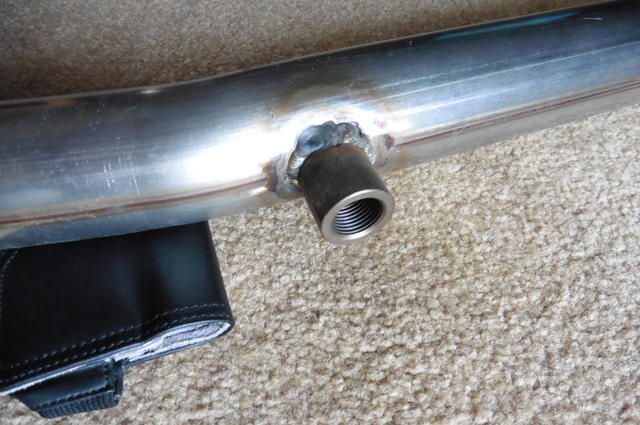
Here is a shot of mine... I managed to find a stainless bung to match the stainless exhaust pipe. It measures right at the recommended 24 inches beyond the collector. One must make sure it is positioned in a manner that does not allow any water (condensation) to come in contact with it. I am sure you are already aware of this... Mine is at about 2:30 (or 9:30 depending on how you view the pipe).
EGT sensors (called thermocouples in turbine engines) are another good way to know how your carbs are performing. They are placed just past the exhaust port in the manifold. Probably more accurate that the O2 style. Aircraft that use reciprocal engines almost always have them to monitor carb mixture performance.
The electrical information gathered by them is sent to the fuel control to help regulate fuel introduced into the combustion section of a turbine engine.
I am sure there are some race cars that use them as well. Both amateur and professional...
Those who confuse Burro and Burrow don't know their @ss from a hole in the ground...
Here is a shot of mine... I managed to find a stainless bung to match the stainless exhaust pipe. It measures right at the recommended 24 inches beyond the collector. One must make sure it is positioned in a manner that does not allow any water (condensation) to come in contact with it. I am sure you are already aware of this... Mine is at about 2:30 (or 9:30 depending on how you view the pipe).
EGT sensors (called thermocouples in turbine engines) are another good way to know how your carbs are performing. They are placed just past the exhaust port in the manifold. Probably more accurate that the O2 style. Aircraft that use reciprocal engines almost always have them to monitor carb mixture performance.
The electrical information gathered by them is sent to the fuel control to help regulate fuel introduced into the combustion section of a turbine engine.
I am sure there are some race cars that use them as well. Both amateur and professional...
Those who confuse Burro and Burrow don't know their @ss from a hole in the ground...
Attachments:
O2 Sensor Bung.JPG 53.7 KB
Ahmed thanked tahoe36c for this post
|
|
Jun 8, 2019 02:53 PM
Top Contributor
Joined 20 years ago
46,843 Posts
|
I have Westech dual needle EGT gauge with a probes on #1 and #3 header tubes, then the O2 just beyond the header collector, the dual EGT gauge lets me monitor the twin HS6s independently, and the O2 gives me a overall number, I shoot for 1300 degrees at WOT on EGT, and that normally nets about 12.5 on O2.
Hap Waldrop
Acme Speed Shop
864-370-3000
Website: www.acmespeedshop.com
hapwaldrop@acmespeedshop.com
Hap Waldrop
Acme Speed Shop
864-370-3000
Website: www.acmespeedshop.com
hapwaldrop@acmespeedshop.com
Member Services:
|
tahoe36c
Paul Hruza
|
Jun 8, 2019 03:16 PM
Joined 12 years ago
14,284 Posts
|
Which is about as good as it gets Hap!!! 
Light aircraft recips are usually between 1200 and 1400. But can vary dependent on the many variables to consider during takeoff, cruise and landing compared to our little cars...
And we don't have to deal with carb icing like they do which is dependent on atmospheric conditions! At least I have never experienced it in an automobile (and I have driven in pretty nasty ass cold conditions around the planet), but I am sure it happens...
Those who confuse Burro and Burrow don't know their @ss from a hole in the ground...
Light aircraft recips are usually between 1200 and 1400. But can vary dependent on the many variables to consider during takeoff, cruise and landing compared to our little cars...
And we don't have to deal with carb icing like they do which is dependent on atmospheric conditions! At least I have never experienced it in an automobile (and I have driven in pretty nasty ass cold conditions around the planet), but I am sure it happens...
Those who confuse Burro and Burrow don't know their @ss from a hole in the ground...
 |
Jun 8, 2019 04:15 PM
Top Contributor
Joined 17 years ago
2,875 Posts
|


Ahmed thanked ex-tyke for this post
|
Jun 8, 2019 04:16 PM
Joined 11 years ago
159 Posts
|
|
Unless the sensors you are using are heated you don't want them to far downstream, they will cool off at idle and not work properly. I work on a lot of new cars and most upstream sensors are close to the head, Acura for example the upstream sensor is only a few inches from the exhaust valves. Paul , I used to drive a series2 Land Rover that would experience carberator iceing on foggy days in the 40's took a while to figure that out as it would melt quickly after it stalled.
|
tvrgeek
Scott S
|
Jun 8, 2019 05:25 PM
Top Contributor
Joined 10 years ago
15,023 Posts
|
Modified says it all. Instrument away!
Cogito ergo sum periculoso
In reply to # 3955793 by Perdido
Scott,
Yes, the engine is modified and like a lot of people I’m into trying different things. Is the factory method sufficient on a HC (9.5:1) engine with a VP12 cam and a few other goodies...I don’t know, but I like to do what I like to do. My original question of drilling and tapping the cast iron manifolds was answered by the proximity of the O2 sensor to excessive heat and I'm taking that into consideration.
Thanks, Rut
Yes, the engine is modified and like a lot of people I’m into trying different things. Is the factory method sufficient on a HC (9.5:1) engine with a VP12 cam and a few other goodies...I don’t know, but I like to do what I like to do. My original question of drilling and tapping the cast iron manifolds was answered by the proximity of the O2 sensor to excessive heat and I'm taking that into consideration.
Thanks, Rut
Cogito ergo sum periculoso
Having trouble posting or changing forum settings?
Read the Forum Help (FAQ) or click Contact Support at the bottom of the page.