MGB & GT Forum
MGB four wheel disc brakes ques.
Posted by TGill







 |
Topic Creator (OP)
Apr 18, 2026 05:44 AM
Joined 8 years ago
8 Posts
|
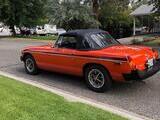
 This topic is about my
 I have converted to Wilwood front calipers & rotors and Ford Mustang GT rear disc brakes, as well as upgrading to a Wilwood Master cylinder. The end result is very poor braking. I have no leaks and have bled the system multiple times correctly. Should there be a proportioning valve in this system? Any thoughts on what I should be looking for? This seemed straight forward at the start.
Attachments:
595077843_10239335808964587_5357498742108903227_n.jpg 82.3 KB

|
Apr 18, 2026 05:59 AM
Top Contributor
 Joined 19 years ago
19,051 Posts
|
|

The probelm with designing your own brake system is that you are the only one who knows the specs. I have to ask about piston surface area in this system and if the master might be too big a diameter. If you do get the right diameter, the pedal stroke might be too long.
My inclination at this point would be to plug the rear brake circuit and see how it stops on front brakes alone. If the fronts don't feel strong then start looking at the master and caliper match and work from there. Then repeate for the rear.
Does Wilwood have a tech support line?
My inclination at this point would be to plug the rear brake circuit and see how it stops on front brakes alone. If the fronts don't feel strong then start looking at the master and caliper match and work from there. Then repeate for the rear.
Does Wilwood have a tech support line?
TGill thanked NOHOME for this post
|
|
Topic Creator (OP)
Apr 18, 2026 06:09 AM
Joined 8 years ago
8 Posts
|
Thanks, I'll try that. I had followed a a post on the BritishV8 forum from Larry Shimp. A 1" Wilwood master was used. I will try your procedure. https://www.britishv8.org/Articles/MGB-Power-Brakes.htm

Jim Blackwood
* BlownMGB-V8
Gunpowder Rd, Florence, KY, USA
 Sign in to contact
|
Apr 18, 2026 06:15 AM
Top Contributor
Joined 19 years ago
9,565 Posts
|
You can find a brake piston size calculator online that can help you, there are several of them so I don't have any particular one in mind. You enter the piston sizes and piston number for front, rear and master and it will give you the line pressure in each circuit. Something in the 700-900psi range seems to be common. With discs at both ends your rear line pressure should probably be about 70% of your front pressure but that can vary a good bit. A proportioning valve can let you change that ratio.
A hard pedal is a sign of a MC that is oversized and a soft pedal may be a sign of air in the system.
Jim
A hard pedal is a sign of a MC that is oversized and a soft pedal may be a sign of air in the system.
Jim
 |
Apr 18, 2026 06:48 AM
Joined 15 years ago
36,362 Posts
|

"Does Wilwood have a tech support line?"
Yes they do. I asked them a bore recommendation on my GT build.
Mk1: CKD 11/66 first registered 8/5/67; owned since 3/77. 18GB +40 balanced. Peter Burgess BVFR head. Piper 285. 123. FidanzaFW. 4synch c/r box. Superpro. Nut and bolt rebuild 2010 - 2015. Tartan Red.
GT: 12/78. VW Golf guards, flush fit front and rear valances, frenched indicators, Mk1 rear lights - LED lights. 'Worked' Rover V8, Monsoon ECU for EFI. Commodore VSV8 GM4L60E, Lokar tiptronic shifter & Quick4 controller. Vintage Air A/C. FC IFS. CCE 4 link rear. Salisbury with Quaife. Jaguar Storm.
Yes they do. I asked them a bore recommendation on my GT build.
Mk1: CKD 11/66 first registered 8/5/67; owned since 3/77. 18GB +40 balanced. Peter Burgess BVFR head. Piper 285. 123. FidanzaFW. 4synch c/r box. Superpro. Nut and bolt rebuild 2010 - 2015. Tartan Red.
GT: 12/78. VW Golf guards, flush fit front and rear valances, frenched indicators, Mk1 rear lights - LED lights. 'Worked' Rover V8, Monsoon ECU for EFI. Commodore VSV8 GM4L60E, Lokar tiptronic shifter & Quick4 controller. Vintage Air A/C. FC IFS. CCE 4 link rear. Salisbury with Quaife. Jaguar Storm.

|
Apr 18, 2026 09:55 AM
Top Contributor
Joined 19 years ago
19,051 Posts
|
|
In reply to # 5043241 by mccohens
Go out and lock them up. See which end is locking first. Should be the rears. If none are locking up you have a different problem.
But to answer your question yes you should have a prop valve. But I suspect something else is amiss also.
But to answer your question yes you should have a prop valve. But I suspect something else is amiss also.
Other way around ; fronts must lock up before the rears. Unless you like spinning the car out under hard braking since you would essentially be re-creating a handbrake turn. That is why the proportioning valve goes on the rear circuit; so you can dial back rear brakes if they lock up first. And you really need a helper and a country road to do this.

smokey w
Juri P
|
Apr 18, 2026 10:11 AM
Top Contributor
Joined 5 years ago
2,511 Posts
|
i agree. On my track cars, I used a proportioning valve to make sure the fronts always locked up first. If the rears lock up first, you will spin. And "in a spin, both feet in" was the rule - lock up all four brakes simultaneously and go in a straight line until you figure out what to do next.
In reply to # 5043269 by NOHOME
Other way around ; fronts must lock up before the rears. Unless you like spinning the car out under hard braking since you would essentially be re-creating a handbrake turn. That is why the proportioning valve goes on the rear circuit; so you can dial back rear brakes if they lock up first. And you really need a helper and a country road to do this.
In reply to # 5043241 by mccohens
Go out and lock them up. See which end is locking first. Should be the rears. If none are locking up you have a different problem.
But to answer your question yes you should have a prop valve. But I suspect something else is amiss also.
But to answer your question yes you should have a prop valve. But I suspect something else is amiss also.
Other way around ; fronts must lock up before the rears. Unless you like spinning the car out under hard braking since you would essentially be re-creating a handbrake turn. That is why the proportioning valve goes on the rear circuit; so you can dial back rear brakes if they lock up first. And you really need a helper and a country road to do this.

Sprint ST
Rob A
|
Apr 18, 2026 11:26 AM
Joined 5 years ago
4,134 Posts
|
Having locked up my rear brakes on the freeway (traffic came to a sudden halt), I did not spin. The car continued to track straight ahead, with the rear wheels locked. The front wheels continued to roll.
I would never join any club, that would have me as a member. - G. Marx
In reply to # 5043275 by smokey w
i agree. On my track cars, I used a proportioning valve to make sure the fronts always locked up first. If the rears lock up first, you will spin. And "in a spin, both feet in" was the rule - lock up all four brakes simultaneously and go in a straight line until you figure out what to do next.
In reply to # 5043269 by NOHOME
Other way around ; fronts must lock up before the rears. Unless you like spinning the car out under hard braking since you would essentially be re-creating a handbrake turn. That is why the proportioning valve goes on the rear circuit; so you can dial back rear brakes if they lock up first. And you really need a helper and a country road to do this.
In reply to # 5043241 by mccohens
Go out and lock them up. See which end is locking first. Should be the rears. If none are locking up you have a different problem.
But to answer your question yes you should have a prop valve. But I suspect something else is amiss also.
But to answer your question yes you should have a prop valve. But I suspect something else is amiss also.
Other way around ; fronts must lock up before the rears. Unless you like spinning the car out under hard braking since you would essentially be re-creating a handbrake turn. That is why the proportioning valve goes on the rear circuit; so you can dial back rear brakes if they lock up first. And you really need a helper and a country road to do this.
I would never join any club, that would have me as a member. - G. Marx
 |
Apr 18, 2026 11:42 AM
Joined 21 years ago
6,537 Posts
|
Proportioning valve might help..
Building a hot rod one does their own engineering. Often takes time and experiments. You will have leftover parts.
My son is trying to make a 69 Chevelle handle and brake like a modern car. He has several masters and other assist devices. Handling was easier. Went from terrible stock to pretty good. Those cars did one thing well. That was going in a straight line.,
L.W.(Larry)Baygents
63B
77 Spit

Building a hot rod one does their own engineering. Often takes time and experiments. You will have leftover parts.
My son is trying to make a 69 Chevelle handle and brake like a modern car. He has several masters and other assist devices. Handling was easier. Went from terrible stock to pretty good. Those cars did one thing well. That was going in a straight line.,
L.W.(Larry)Baygents
63B
77 Spit
 |
Apr 18, 2026 12:50 PM
Top Contributor
Joined 22 years ago
22,385 Posts
|

Generally the fronts should lock just before the rears. Once a tire is skidding the effective coefficient of friction drops significantly. So if there is any yaw (e.g., car is just coming around a corner) the rear will break loose and the car will spin. When you locked the rears I presume you were going straight - fortunately you didn't swap ends!
Designing a braking system is not a trivial task. The balance is set by multiple factors. In some cases it may be achieved by having the correct diameter slave pistons on the front and rear. A dual circuit master cylinder may also provide different pressures to the front and rear circuits. And finally a proportioning valve may be needed.
The problem is that the steering tires still have adhesion and steer. I assume you mean that your skill will be sufficient to overcome the oversteer. Watch Formula 1. Sometimes cars have a problem causing the rear tires to lock. Not even the best drivers in the world can reliably overcome that situation. Consider the physics. There is a braking force on the front tires and almost none on the skidding rears. If the alignment isn't perfect you are applying a significant torque to the entire car. And it will twist.
Even my 1990 GMC Van (which has a very early anti-lock brake system) only applied anti-lock to the rear wheels. At all costs they didn't want a rear wheel lockup.
Terry Ingoldsby
terry.ingoldsby@DCExperts.com
Designing a braking system is not a trivial task. The balance is set by multiple factors. In some cases it may be achieved by having the correct diameter slave pistons on the front and rear. A dual circuit master cylinder may also provide different pressures to the front and rear circuits. And finally a proportioning valve may be needed.
Quote:
I will take rear lockupfirst every time. Won't spin if my steering tires still steer
The problem is that the steering tires still have adhesion and steer. I assume you mean that your skill will be sufficient to overcome the oversteer. Watch Formula 1. Sometimes cars have a problem causing the rear tires to lock. Not even the best drivers in the world can reliably overcome that situation. Consider the physics. There is a braking force on the front tires and almost none on the skidding rears. If the alignment isn't perfect you are applying a significant torque to the entire car. And it will twist.
Even my 1990 GMC Van (which has a very early anti-lock brake system) only applied anti-lock to the rear wheels. At all costs they didn't want a rear wheel lockup.
Terry Ingoldsby
terry.ingoldsby@DCExperts.com
|
Arizona Shorty
G M
P, A, Albania
 Sign in to contact
|
Apr 18, 2026 01:01 PM
Joined 2 years ago
4,926 Posts
|
"I will take rear lockupfirst every time. Won't spin if my steering tires still steer"
Here is where anecdotal comments or lack of experience leads to safety issues. The question in not whether locking front or rear tires causes a spin all the time, some of the time, or none of the time. The question is whether your brakes are set up correctly for safe and controlled use under all circumstances.
Just because you can steer the front tires does not in any way guarantee you can maintain control of the car with the rear tires locked. All of this depends on much more than simply being able to steer. Surface conditions, tire condition, weight distribution, and deflection of the steering angle all play into a skid or spin, and you can't control these things. In a skid it is very common to run out of steering before you run out of spin, at which point, tire slip is the only control you have, and if the rear tires are locked, you can't control the degree of slip. Doesn't matter who you are. Mario Andretti would end up in the guard rail in a rear tire lock up skid/spin.
Braking bias is controlled either by design of the many parts being in balance, or with a proportioning valve if the components are not designed as a system. Look at any car manufactured with disc brakes all around, and tell me if the front disc and rear disc are the same size. When you figure out which one is smaller, ask yourself why it is so.
Ideally, the ability to lock tires on a dry road should either be very close to equal balance, or front biased so that the fronts break loose first. Even locked up, you can still steer to an extent if it is the fronts that are locked. You can't control the exercise if the rears are locked. This is not anecdote, it is physics. Ask an automotive engineer to explain it.
And if you are lucky enough to lock rear tires and stay straight, go directly to the nearest 7/11 and buy a lottery ticket.
Edited 1 time(s). Last edit at 2026-04-18 01:02 PM by Arizona Shorty.
Here is where anecdotal comments or lack of experience leads to safety issues. The question in not whether locking front or rear tires causes a spin all the time, some of the time, or none of the time. The question is whether your brakes are set up correctly for safe and controlled use under all circumstances.
Just because you can steer the front tires does not in any way guarantee you can maintain control of the car with the rear tires locked. All of this depends on much more than simply being able to steer. Surface conditions, tire condition, weight distribution, and deflection of the steering angle all play into a skid or spin, and you can't control these things. In a skid it is very common to run out of steering before you run out of spin, at which point, tire slip is the only control you have, and if the rear tires are locked, you can't control the degree of slip. Doesn't matter who you are. Mario Andretti would end up in the guard rail in a rear tire lock up skid/spin.
Braking bias is controlled either by design of the many parts being in balance, or with a proportioning valve if the components are not designed as a system. Look at any car manufactured with disc brakes all around, and tell me if the front disc and rear disc are the same size. When you figure out which one is smaller, ask yourself why it is so.
Ideally, the ability to lock tires on a dry road should either be very close to equal balance, or front biased so that the fronts break loose first. Even locked up, you can still steer to an extent if it is the fronts that are locked. You can't control the exercise if the rears are locked. This is not anecdote, it is physics. Ask an automotive engineer to explain it.
And if you are lucky enough to lock rear tires and stay straight, go directly to the nearest 7/11 and buy a lottery ticket.
Edited 1 time(s). Last edit at 2026-04-18 01:02 PM by Arizona Shorty.
|
Sprint ST
Rob A
|
Apr 18, 2026 01:16 PM
Joined 5 years ago
4,134 Posts
|
In reply to # 5043318 by Arizona Shorty
And if you are lucky enough to lock rear tires and stay straight, go directly to the nearest 7/11 and buy a lottery ticket.
I have even locked up the
Rear wheel on a motorcycle on pavement, and kept the bike heading straight, though the rear was doing otherwise

I would never join any club, that would have me as a member. - G. Marx
 Magee, MS, USA
Sign in to contact
|
Apr 18, 2026 02:34 PM
Top Contributor
Joined 15 years ago
7,266 Posts
|
John,
I didn't see why you feel the brakes are poor. Is there an issue with pedal feel? Does it take more pedal effort than before? The brake master bore may big for the calipers used.
What works well for me is as follows; 3.54 square inch of total piston area (2.12" (54mm) MGB front) vs 1.74 square inch total surface area rear (1.49" (38mm) rear caliper bore), works well with a .75" diameter master cylinder or a .812" master bore for MGB with a brake booster.
Keep in mind that opposing caliper pistons do not double the surface area for the applied pressure.
The other day I was watching an episode of Roadkill. In that episode they mentioned poor braking with a disc brake conversion using 4 piston Baer aluminum calipers. Using a dial indicator during the investigation they found that the aluminum calipers had a lot of flex when the brakes are applied. They switched to single piston floating iron calipers and the problem was solved.
You might want to see if the aluminum calipers are flexing.
BTW a proportioning may not be needed. Using the brake balance calculator you can calculate your brake bias. On my conversions I have found that 67/33 gives good safe performance.
Here is a link to a brake bias calculator
https://www.tceperformanceproducts.com/bias-calculator/
For better pedal feel i like to install a 2psi residual check valve. I have feedback from folks saying the residual valves are not necessary. That's a matter of choice
CAUTION!!
Life's uncertain, eat dessert first
Know the rules well so you can break them effectively. Dalai Lama
Journal index
https://www.mgexp.com/journal/Charles-Durning.2966/toc
I didn't see why you feel the brakes are poor. Is there an issue with pedal feel? Does it take more pedal effort than before? The brake master bore may big for the calipers used.
What works well for me is as follows; 3.54 square inch of total piston area (2.12" (54mm) MGB front) vs 1.74 square inch total surface area rear (1.49" (38mm) rear caliper bore), works well with a .75" diameter master cylinder or a .812" master bore for MGB with a brake booster.
Keep in mind that opposing caliper pistons do not double the surface area for the applied pressure.
The other day I was watching an episode of Roadkill. In that episode they mentioned poor braking with a disc brake conversion using 4 piston Baer aluminum calipers. Using a dial indicator during the investigation they found that the aluminum calipers had a lot of flex when the brakes are applied. They switched to single piston floating iron calipers and the problem was solved.
You might want to see if the aluminum calipers are flexing.
BTW a proportioning may not be needed. Using the brake balance calculator you can calculate your brake bias. On my conversions I have found that 67/33 gives good safe performance.
Here is a link to a brake bias calculator
https://www.tceperformanceproducts.com/bias-calculator/
For better pedal feel i like to install a 2psi residual check valve. I have feedback from folks saying the residual valves are not necessary. That's a matter of choice
In reply to # 5043224 by TGill
I have converted to Wilwood front calipers & rotors and Ford Mustang GT rear disc brakes, as well as upgrading to a Wilwood Master cylinder. The end result is very poor braking. I have no leaks and have bled the system multiple times correctly. Should there be a proportioning valve in this system? Any thoughts on what I should be looking for? This seemed straight forward at the start.
CAUTION!!
Life's uncertain, eat dessert first
Know the rules well so you can break them effectively. Dalai Lama
Journal index
https://www.mgexp.com/journal/Charles-Durning.2966/toc
Having trouble posting or changing forum settings?
Read the Forum Help (FAQ) or click Contact Support at the bottom of the page.